Much has been said about public relations making a comeback with generative AI. You likely know that large language models (LLMs) like ChatGPT, Gemini or Copilot frequently cite high authority news sources, like the New York Times, Wall Street Journal or CNN.
But this raised a question for me: What role does local news coverage play in generative engine optimization (GEO)? Many of our clients are national brands looking to localize their earned media outreach in the Pacific Northwest, so how does the coverage we secure influence their LLM results?
To find out, I did some digging and asked several LLMs both how they use local news coverage, the top publications they cite in the Pacific Northwest, and common prompts entered by users that return results citing news from The Oregonian and Seattle Times. While it didn’t totally lift the curtain on how generative AI decides what to cite, the info below can help inform public affairs and corporate communications pros’ media strategies – and make sure their brands show up in their audience’s LLM results.
How LLMs decide what news content to cite
This is a very streamlined list, but across the board, LLMs appear to focus on several factors:
- Authority: This is determined in two ways: The first by the news publication itself – its domain authority, backlinks, and how well established its brand is. The second is the authority of the author themselves – their volume of articles, backlinks, subject matter expertise and credentials.
- Editorial standards: LLMs look for a published masthead, specific bylines in its stories, whether sponsored content is distinguished, and clear sourcing with on-the-record interviews, linked data or primary documents.
- Original content: Sponsored content is not cited unless a user specifically requests it to be included, and aggregator websites are considered less relevant than original editorial content. Both Gemini and ChaptGPT said they scan for phrases like “paid content” or a byline attributed to a company instead of a reporter, and they check for overly promotional tone.
- Frequency of publication: What publication has the most up-to-date news on a subject? Websites with content that is updated regularly are considered more relevant than static websites.
Together, all of this means that it’s not just national news that LLMs are citing. They’re also leveraging small newsrooms with excellent reporting. Which led me to ask….
What publications in the Pacific Northwest are cited most frequently by generative AI?
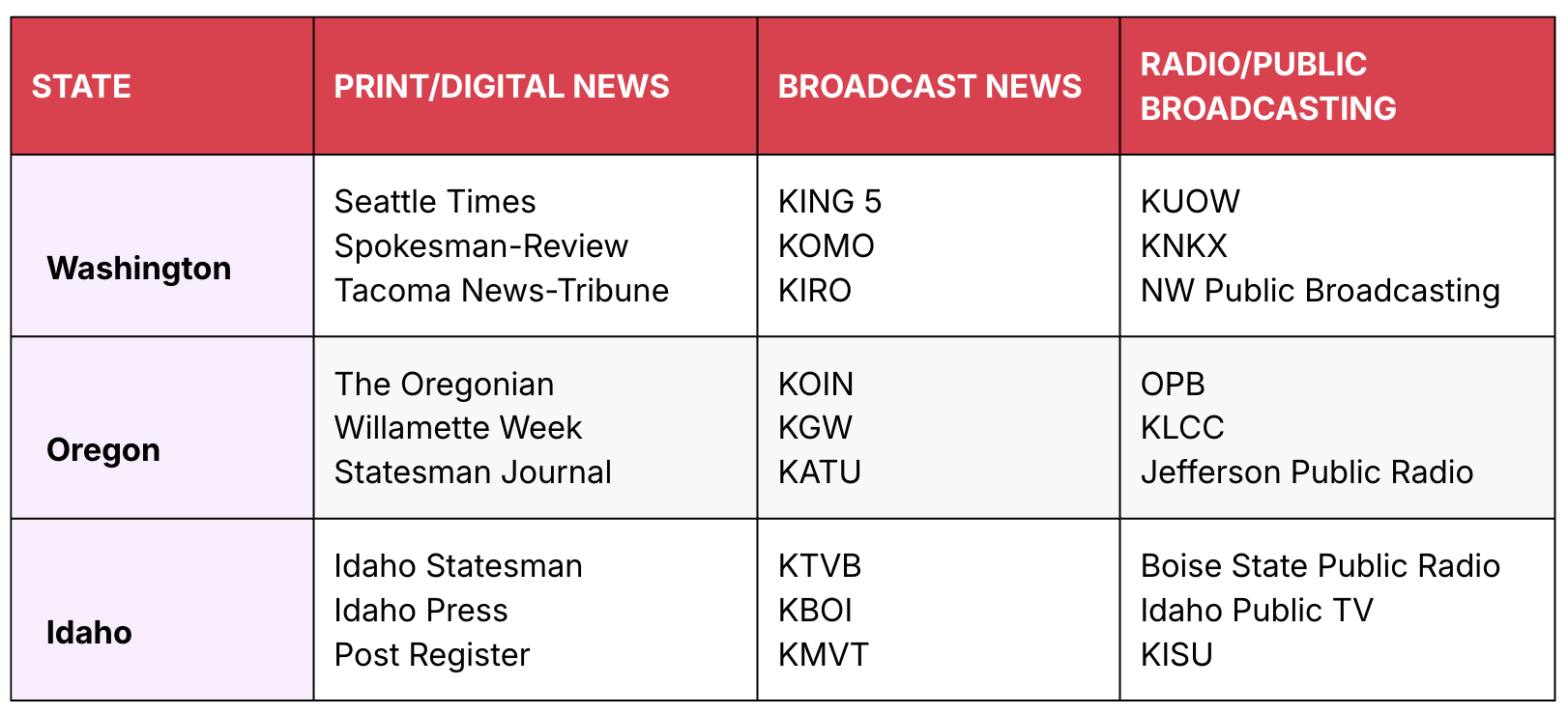
When asked what local publications they most frequently cite, major LLMs named the biggest publications in each state:
But…what prompts are actually generating local news results?
To get a better understanding of what prompts are triggering LLMs to include results from local news coverage, I asked them to focus in on results from The Seattle Times and The Oregonian. All of the results had a strong geographic focus, and illustrate how local news coverage is being used by LLMs. It’s important to note that LLMs consider authority on a specific topic and the frequency of articles published about a topic when determining what news to cite – so while we’re focusing on two major publications below, LLMs will utilize whatever local news site best aligns with the query.
The Oregonian was most frequently cited for questions related to state & local government, regional economy/business, environment and energy, schools/education, public safety, and courts/legal news. Gemini and ChatGPT shared these sample prompts that have included articles from The Oregonian:
- How are Oregon universities adapting to enrollment changes?
- What’s happening with wildfire prevention funding in Oregon?
- What are the environmental effects of Oregon’s offshore wind projects?
- What’s driving commercial real estate prices in Portland right now?
- What is the status of Oregon’s transportation bill?
The Seattle Times was most frequently cited for prompts related to breaking news, local politics and cultural events:
- What are the latest updates on the I-5 closure in SODO?
- Can you summarize the recent city council vote on affordable housing?
- What did local sports writers say about the Seattle Kraken’s performance in their last game?
- What new restaurants are good in the Seattle area?
- What’s happening with Amazon’s Seattle offices?
This has big implications for corporate communications and public affairs strategy. Data shows that 60% of all search queries are now answered without a click (meaning users are satisfied by AI summaries and not clicking through onto a website for more information). We can say confidently that PNW audiences are turning to generative AI to both identify where and how they’re spending their money locally, and to keep themselves informed on local issues.
And that means local news is now more important than ever to ensure your brand shows up in AI results. Crafting a strong local earned media strategy and building relationships with local reporters is essential to manage your brand’s reputation and support public affairs initiatives.
With newsrooms in flux, many PR pros are struggling to land stories with their local media. If you’re in that bucket, this article I recently authored for PR Daily may help.