Stronger Cultures Start with Clear Communication
Insights from new research uncover what helps employees feel informed and supported.
In conversations with communications leaders across the Northwest, one theme keeps rising to the surface: employees are demanding clearer, more consistent communication from leadership, and organizations are struggling to keep up. At the same time, leaders know communication matters but often feel unsure where to start. This gap is fueling frustration, weakening trust, and slowing progress at a moment when connection matters more than ever.
Employees want clarity, transparency, and regular updates that show their feedback is heard. Leaders, meanwhile, are navigating economic pressures, new technology, shifting expectations, and evolving hybrid work norms. It’s easy to overthink both the message and the medium.
The good news? Communication works. Strong communication and engagement practices drive meaningful business outcomes, including 21% higher profitability, 17% higher productivity, and a 60% increase in trust.
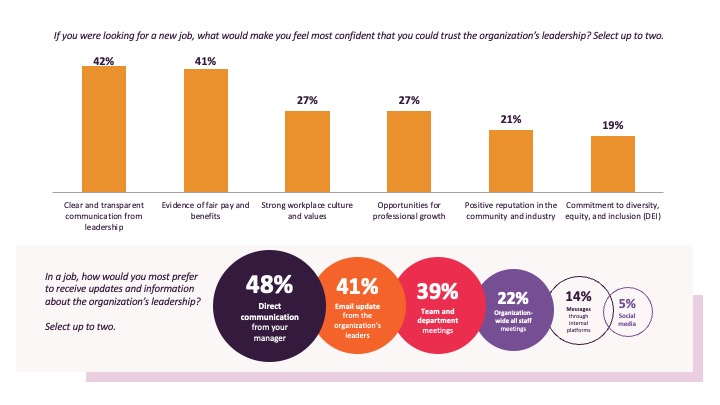
In a recent survey with our sister agency, DHM Research, employees identified the top drivers of trust in leadership: clear, transparent communication (42%), fair pay and benefits (41%), strong culture and values (27%), and growth opportunities (27%). Their preferred channels were direct communication from their manager (48%) and email updates from leadership (41%).
So what does effective leadership communication look like?
- Be transparent and visible: Show up regularly—online and in person. Share openly about decisions, priorities, and challenges; answer big questions; and, if you don’t know what to say, have a plan to follow up.
- Create two-way communication: Employees want to be heard and see their input matter. Build structured opportunities for dialogue and close the loop by showing what changed as a result.
- Keep messages short, timely, and actionable: In a crowded communication environment, clarity wins. Use short, concise memos and practical, quick updates. Brevity paired with relevance builds trust. Always answer the question employees are asking: “What does this mean for me?”
- Use the proper channels: Meet employees where they are. For dispersed or frontline teams, mobile apps, text updates, or digital hubs may be more effective than email. Understanding channel preferences is essential.
- Stay consistent: Consistency signals stability. Even during uncertainty or organizational change, a reliable communication rhythm helps employees feel grounded and informed.
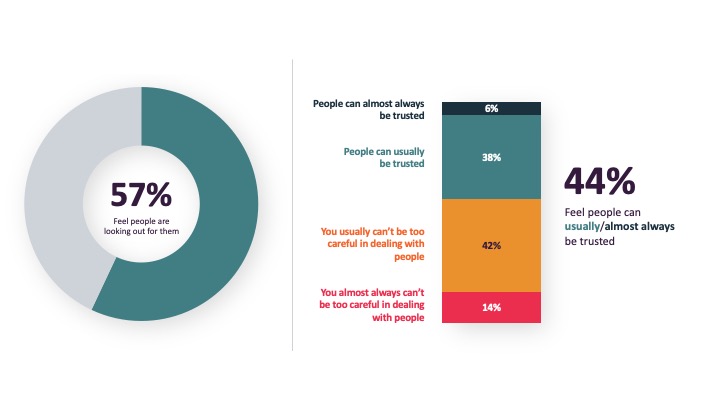
Bottom line: it all comes down to trust in leadership. In our poll, only 44% of people reported that they believe others can be trusted, and just 57% feel someone has their back. Those who do feel connected are more satisfied and optimistic. Inside organizations, that sense of connection fuels trust, collaboration, creativity, and retention—directly impacting the brand and the bottom line. Clear, consistent communication helps employees feel informed, included, and valued, which is how strong cultures are built.